

How to Use Chopsticks: A Step-by-Step Guide for Beginners

How to Hold and Use Chopsticks, Step by Step
Using chopsticks looks tricky, but it comes down to one idea: the bottom chopstick stays still and the top chopstick does all the moving. Once your hand learns that, everything else follows. This guide walks you through how to hold chopsticks step by step, how to practise at home and the small etiquette points that matter at a Japanese table.
Before You Start: Choose Easy Chopsticks
Japanese chopsticks are shorter than Chinese chopsticks and taper to a fine point, which makes them good for picking up small pieces of fish and rice. For learning, a pair that fits your hand is more important than anything else. Many Japanese sets come in two lengths: around 23 cm for larger hands and around 21 cm for smaller hands. The Fuji Chopsticks Gift Set and Arigatou Chopstick and Rest Gift Set both include a 23 cm and a 21 cm pair, so two people can each find a comfortable length.
Step 1: Position the Bottom Chopstick
Rest the thicker end of the first chopstick in the web between your thumb and index finger. Let the lower part lie against the side of your ring finger, just below the fingernail. Press it lightly in place with the base of your thumb. This chopstick is your anchor and should not move while you eat.
Step 2: Hold the Top Chopstick Like a Pencil
Pick up the second chopstick and hold it the way you would hold a pencil: between the pad of your thumb, your index finger and your middle finger. Hold it about a third of the way down from the top, not too close to the tips. Holding higher gives you more reach; holding lower gives you more control.

Step 3: Line Up the Tips
Tap the tips gently on the table or your plate so both chopsticks are level. If one sticks out further than the other, the food will slip. Lining them up takes a second and makes a big difference.
Step 4: Move Only the Top Chopstick
To open and close, bend your index and middle fingers so the top chopstick pivots towards the bottom one, like a beak. The bottom chopstick stays still in your hand the whole time. If both chopsticks are moving, go back to Step 1 and re-settle the bottom one against your ring finger.
Step 5: Practise at Home
Start with easy, grippy foods such as cubes of tofu, pieces of cucumber or sushi rolls. Then move on to smaller things like edamame or peanuts. A few minutes of practice at each meal for a week is usually enough to make the grip feel natural. Keep your hand relaxed; squeezing hard makes the chopsticks cross over.
Basic Chopstick Etiquette in Japan
Never stand chopsticks upright in a bowl of rice. This resembles a funeral offering.
Don't pass food from your chopsticks to someone else's chopsticks. This also has funeral associations.
Don't point with your chopsticks or wave them over dishes while deciding what to take.
When you pause, lay your chopsticks on a chopstick rest with the tips pointing left, rather than across the top of your bowl.
Gift Ideas for Chopstick Beginners
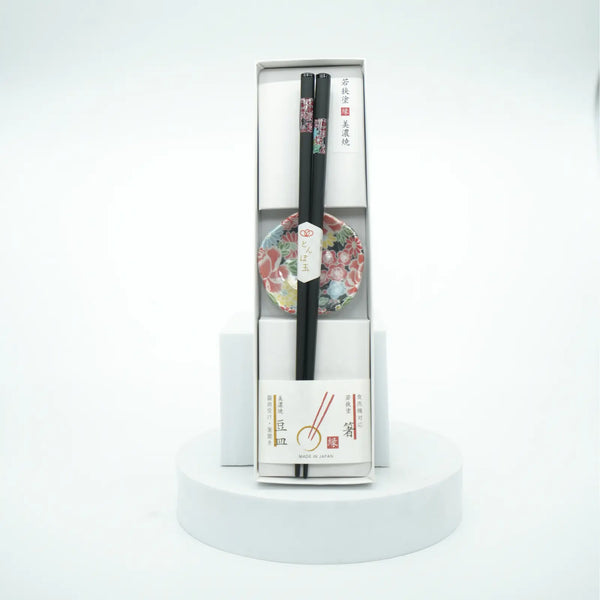
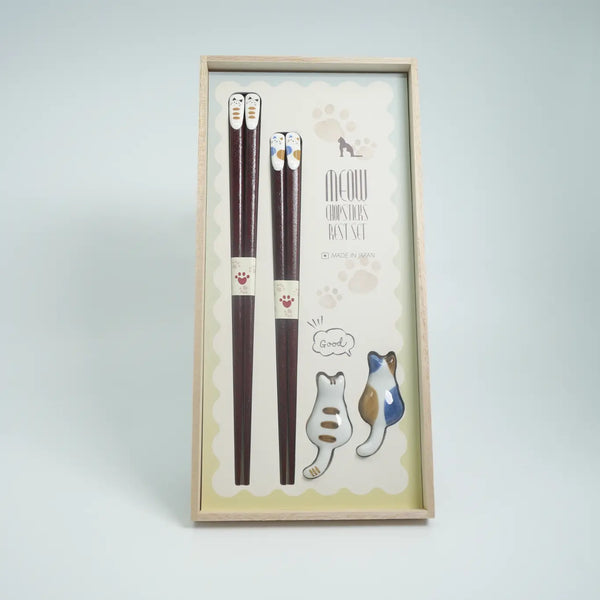
A set that includes a rest makes good habits easy from day one. The Hanazume Chopstick & Rest Gift Set pairs 23 cm bamboo Wakasa lacquer chopsticks with a Mino ware dish that doubles as a rest. The Japanese Cat Chopsticks Gift Set includes a 23 cm and a 20.5 cm pair with two cat-shaped rests in a wooden gift box. For a lighter gift, the Harmony Blossom Chopstick Set is slim, balanced and comfortable for everyday meals.
Chopstick Sets to Practise With
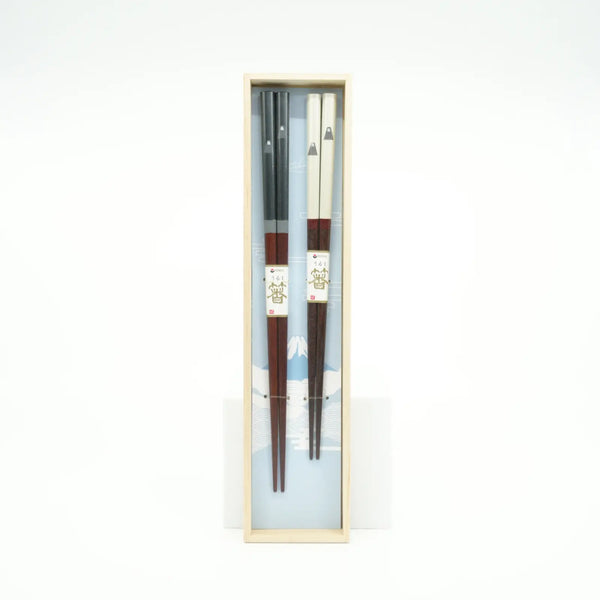

Ready for your own pair? Browse every pair of Japanese chopsticks we stock, delivered across Australia.
Shop Japanese chopsticksFrequently Asked Questions
Only the top chopstick moves. The bottom chopstick stays still against your ring finger and the base of your thumb, while your index and middle fingers move the top one.
Rest the bottom chopstick in the web of your thumb and against your ring finger, then hold the top chopstick like a pencil between your thumb, index finger and middle finger, about a third of the way down.
Around 23 cm suits most adults with larger hands, and around 21 cm suits smaller hands. Children usually need a shorter pair.
A chopstick rest gives you somewhere clean to put your chopsticks between bites, so the tips don't touch the table. It's also considered good manners in Japan.