


Kutani Ware
Kutani ware (九谷焼) is Japan's colourful hand-painted porcelain from Ishikawa Prefecture, with roots going back to 1655. Its signature is overglaze painting in five traditional colours, and every piece is decorated by hand, so no two are exactly alike.
Our collection includes the Atelier Yu Cats in a Sunny Spot Kutani Mug, the Hanazume Handmade Mug, the Jumping Rabbit Mug, Kacho Fugetsu mugs and teapots, the Sparrow Teacup, and matcha bowls and sake sets for gifting.
Learn how to spot genuine pieces in What Is Kutani Ware?, or browse the Cats in a Sunny Spot range and Kutani teapots. Shipping is free Australia-wide on orders over $100.


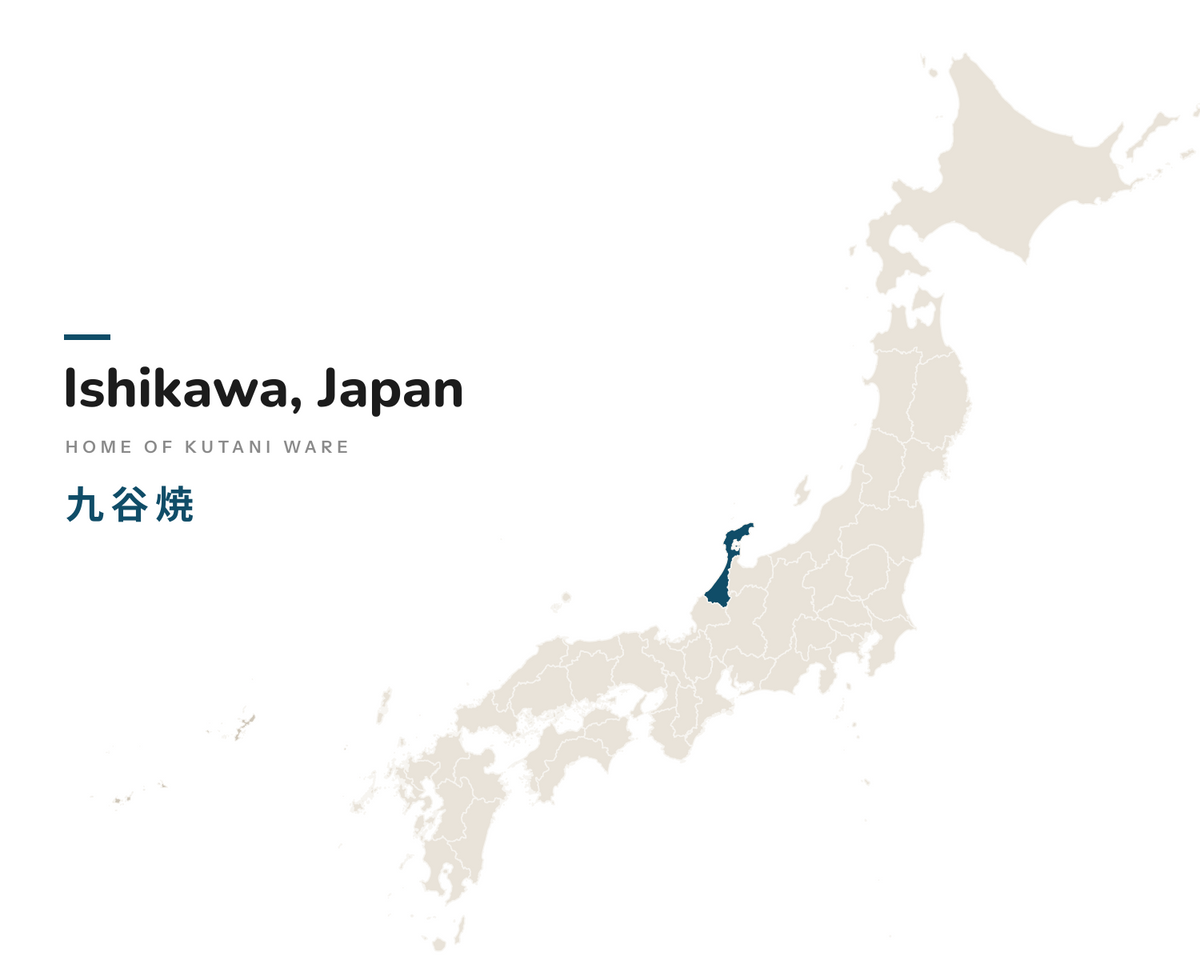
Ishikawa Prefecture, Japan
The Home of Kutani Ware
Kutani ware (九谷焼, Kutani-yaki) is a Japanese porcelain tradition from Ishikawa Prefecture on Japan's west coast. Its story began in the village of Kutani in 1655, when the discovery of porcelain stone led to the establishment of local kilns.
Known for vivid overglaze decoration, Kutani ware celebrates five traditional colours: green, yellow, red, purple and deep blue. From bold flowers and birds to intricate patterns, these rich enamel designs bring a painterly character to everyday tableware.
More about Kutani ware
What Is Kutani Ware?
Kutani ware is a traditional Japanese porcelain from Ishikawa Prefecture on Japan's west coast, where production began in the mid-1600s in the village of Kutani, meaning 'nine valleys'. After the original kilns closed, the tradition was revived in the early 1800s, and Kutani porcelain went on to be exported and collected around the world.
The Five Colours of Kutani
Kutani ware is best known for Kutani gosai, its five traditional overglaze colours: green, yellow, red, purple and deep blue. These enamels are painted on top of the glazed porcelain and fired again, giving the colours their rich, jewel-like finish.
Hand-Painted Designs
Look for classic motifs such as kacho fugetsu ('flower, bird, wind, moon') and the densely packed flower patterns known as hanazume, alongside rabbits, sparrows and seasonal scenes.
Kutani Ware to Use Every Day
Kutani ware isn't just for display cabinets. Explore hand-decorated teapots and tea sets, tea cups and matcha bowls, mugs and sake sets. For cat lovers, Atelier Yu's Cats in a Sunny Spot collection brings the Kutani tradition into a playful, modern world.
A Japanese Gift to Treasure
Bold, beautiful and made to be noticed, Kutani ware has long been a favourite for gifts and special occasions in Japan. Browse our Japanese gift sets for presents that arrive ready to give.
Frequently Asked Questions
Kutani ware is a traditional Japanese porcelain from Ishikawa Prefecture, dating back to the mid-1600s. It's famous for bold overglaze painting in five signature colours: green, yellow, red, purple and deep blue.
Most Kutani ware has the characters for Kutani painted on the base, often with the artist's or kiln's name. For antiques, a specialist dealer can help confirm age and authenticity.
Hand-painted Kutani ware is best washed gently by hand to protect the design and keep the colours bright. Check each product page for care instructions.