

Maneki Neko Meaning: The Story of Japan's Lucky Cat

Maneki Neko Meaning: The Story of Japan's Lucky Cat
You've almost certainly seen one: a cheerful white cat sitting upright with one paw raised, perched by the counter of a restaurant or shop. That's the maneki neko, Japan's famous lucky cat, and it's one of the most recognised good-luck charms in the world. But what does the raised paw actually mean? Why are some cats gold and others black? And is it really Japanese? Here's everything you need to know about the maneki neko lucky cat, and how to bring a little of its luck into your home.
What Is a Maneki Neko?
Maneki neko translates to 'beckoning cat'. It's a traditional Japanese figurine of a cat with one or both paws raised, believed to invite good fortune, customers and prosperity. Although many people call it a 'waving cat', it isn't waving goodbye at all. In Japan, the gesture for 'come here' is made with the palm facing forward and the fingers bending downwards, which looks a lot like a wave to Western eyes. The maneki neko is beckoning good luck towards you.
The Legend Behind the Lucky Cat
There are several stories about how the maneki neko began, and the most famous comes from Gotokuji Temple in Tokyo. As the legend goes, a powerful feudal lord was caught in a storm and sheltering under a tree when he noticed a temple cat raising its paw as if calling him over. He followed the cat, and moments later lightning struck the tree where he had been standing. Grateful to the cat for saving his life, he became the temple's patron and brought it great prosperity. Today, Gotokuji is filled with thousands of small white lucky cats left by visitors.
Is the Lucky Cat Japanese or Chinese?
The maneki neko is Japanese, and it became popular during the Edo period. It's also widely seen in Chinese restaurants and businesses around the world, which is why it's often mistaken for a Chinese symbol. Its popularity across Asia simply shows how much people everywhere love a little extra luck.
What Does the Raised Paw Mean?
Left Paw Raised
A lucky cat with its left paw raised is traditionally said to invite people: customers, visitors and good company. That's why you'll often see left-paw cats at shop and restaurant entrances.
Right Paw Raised
A lucky cat with its right paw raised is traditionally said to invite money and good fortune. It's a popular choice for homes and for anyone starting a new venture.
Both Paws Raised
A maneki neko with both paws raised is inviting both people and prosperity at once. Some people love it for its extra enthusiasm, while others joke that it's being a little greedy.
What Do the Lucky Cat Colours Mean?
The classic maneki neko is white, but over time different colours have taken on their own meanings. White is associated with happiness and purity, gold or yellow with wealth and money, and black with protection from bad luck. Red is traditionally linked to warding off illness and evil, while pink is associated with love and relationships. Many modern lucky cats come in brighter colours too, so it's perfectly fine to simply choose the one that makes you smile.
A Note on the Koban Coin and Bell
Look closely at a traditional maneki neko and you'll often see it holding a large oval gold coin called a koban, which was used in Edo-period Japan. The coin is a symbol of wealth, and some are marked with a value far greater than any real coin, a playful wish for enormous fortune. Many lucky cats also wear a red collar with a small bell, inspired by the collars worn by pampered cats in wealthy households at the time.
Where to Place a Maneki Neko
Traditionally, a lucky cat is placed near the entrance of a shop or home, facing the door, so it can beckon good fortune in. In a business, many owners keep one near the cash register. At home, a lucky cat on a shelf near the front door, in the kitchen or on your desk is a lovely daily reminder to welcome good things into your life.
Bring the Lucky Cat Into Your Everyday
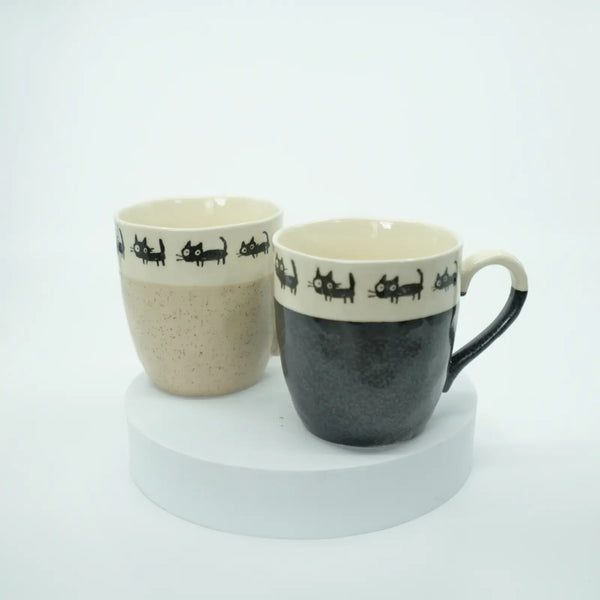
You don't need a figurine to enjoy the maneki neko's good fortune. Japanese makers bring the lucky cat to everyday ceramics, so you can start each day with a little luck.
Lucky Cat Mugs
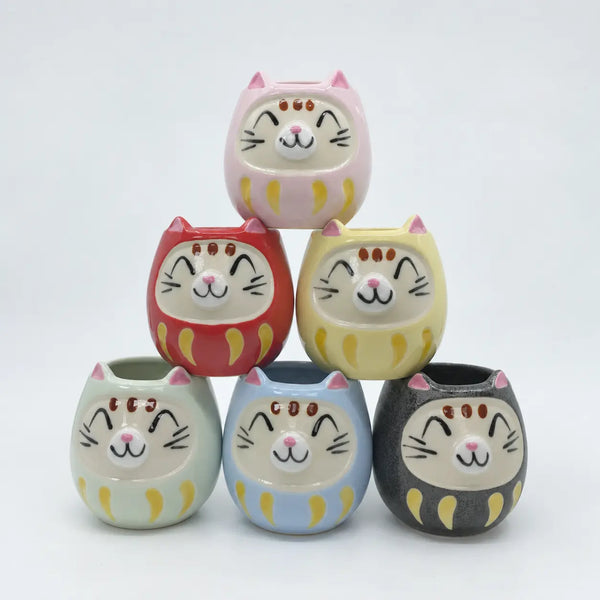
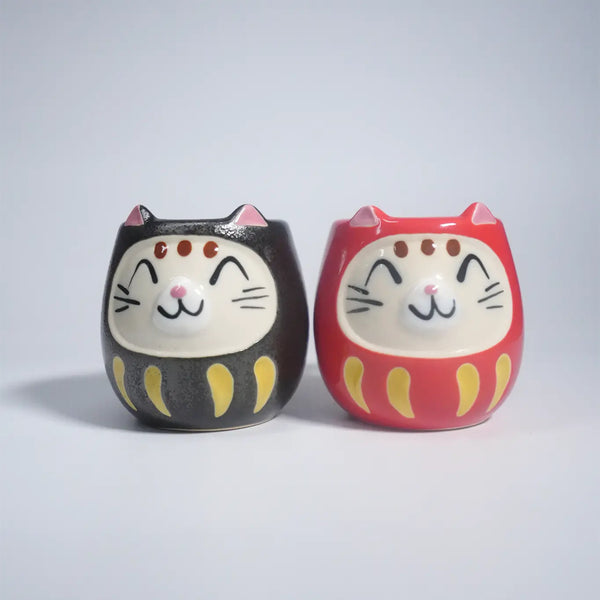
The Lucky Cat Daruma Mug Cup combines two of Japan's most beloved good-luck symbols, the maneki neko and the daruma doll, in one cheerful Mino ware mug. It comes in several colours, so you can choose the one that matches the luck you're hoping for. Want to give it as a present? The Lucky Cat Daruma Mug Gift Set arrives ready to give. Learn more about the daruma in our guide to the daruma doll.
Lucky Cat Sake Set
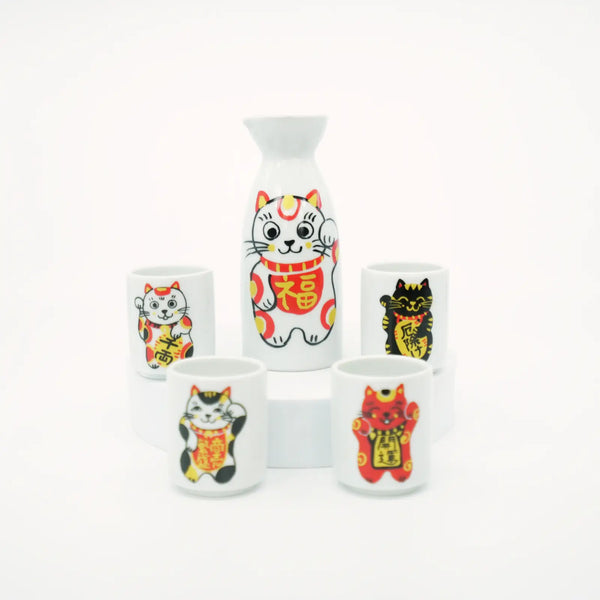
For the host who loves entertaining, the Maneki Neko Lucky Cat Sake Set invites good luck to every pour. It's a memorable housewarming or new business gift. See our sake set guide for tips on serving sake.
More Japanese Cat Gifts
Explore our full range of Japanese cat mugs and gifts, or read our gifts for cat lovers guide for more ideas.
Frequently Asked Questions
Maneki neko means 'beckoning cat' in Japanese. It's a traditional good-luck figure believed to invite fortune, customers and prosperity.
Traditionally, a raised left paw invites people and customers, while a raised right paw invites money and good fortune. A cat with both paws raised invites both.
No. The maneki neko is beckoning, not waving. In Japan, the gesture for 'come here' is made with the palm facing forward, which looks like a wave to many Westerners.
Yes. A maneki neko is a popular gift for new homes, new businesses, birthdays and Lunar New Year, because it represents good fortune and a warm welcome.