


The Great Wave off Kanagawa: Meaning, History & Hokusai

The Great Wave off Kanagawa: Meaning, History and How to Bring Hokusai Home
You've almost certainly seen it: on a tote bag, a phone case, a tattoo, maybe even an emoji. A towering blue wave curls over three tiny boats while Mount Fuji sits quietly in the distance. That's The Great Wave off Kanagawa, a woodblock print created by Japanese artist Katsushika Hokusai around 1831, and it's one of the most recognised images on the planet. But most people who know the picture don't know the story behind it: who made it, what it means, or why a small print sold cheaply on the streets of old Tokyo became a global icon. Follow these five simple steps and you'll understand Hokusai's Great Wave better than most people who've stood in front of it.
Step 1: Get to Know The Great Wave off Kanagawa
Before the meaning, the basics. The Great Wave off Kanagawa is a Japanese woodblock print in the ukiyo-e style, a term that translates to "pictures of the floating world". Its Japanese title, Kanagawa-oki nami ura, means "Under the Wave off Kanagawa", which describes the scene: fishermen caught beneath a monster wave off the coast near modern-day Yokohama. The original print is surprisingly small, roughly 25 by 37 centimetres, about the size of an A4 sheet turned sideways. It was never meant to hang in a gallery. It was designed as affordable art for ordinary people, printed in the thousands and sold for about the price of a bowl of noodles. That humble start is part of what makes its fame so remarkable.
Step 2: Meet Katsushika Hokusai, the Artist Behind the Wave
Katsushika Hokusai (1760–1849) was one of Japan's most prolific artists, producing thousands of prints, paintings and sketches across a career of about seventy years. He was restless: he moved house dozens of times and worked under more than thirty different artist names. Here's the part that surprises most people: Hokusai was around seventy years old when he created the Great Wave. Far from slowing down, he believed his best work was still ahead of him, and late in life he signed pieces as "Gakyō Rōjin", meaning "old man mad about painting". If you've ever thought it was too late to start something, Hokusai is a pretty good counterargument.
Step 3: Understand the Meaning of The Great Wave off Kanagawa
This is where the print earns its reputation. At first glance it's a dramatic seascape, but spend a minute with it and the layers start to show.
The Wave, the Boats and Mount Fuji
Look closely and you'll find three long, narrow fishing boats with their rowers bent low, gripping on as the wave rises above them. The crest breaks into claw-like fingers of foam that seem to reach down towards the men. Then there's the clever part: Mount Fuji, Japan's sacred mountain, sits tiny in the background, perfectly framed inside the hollow of the wave. Hokusai makes the most important mountain in Japan look small, and that's entirely the point.
Nature Versus Humanity
The most common reading of the Great Wave off Kanagawa meaning is the contrast between the overwhelming power of nature and the fragility of human life. The wave is chaos, the boats are vulnerable, and Mount Fuji is steady and permanent in the distance. It's a scene about how small we are, but also about endurance: the fishermen haven't given up, and the mountain isn't going anywhere. That tension between fear and resilience is a big reason the image still resonates nearly two centuries later.
The Blue That Made It Famous
Much of the print's impact comes down to one colour. Hokusai used Prussian blue, a synthetic pigment that had only recently become widely available in Japan. Compared with traditional plant-based blues, it was deeper, richer and far longer-lasting, which gave the wave its unforgettable intensity. It was cutting-edge at the time, and it helped turn the series into a commercial hit.
A Note on Thirty-Six Views of Mount Fuji
The Great Wave wasn't a one-off. It opened Hokusai's celebrated series Thirty-Six Views of Mount Fuji, published in the early 1830s, with each print showing the mountain from a different place, season or angle. The series sold so well that ten more prints were added, bringing the total to forty-six. The other standout is Fine Wind, Clear Morning, better known as "Red Fuji", which shows the mountain glowing red at dawn. When Japan opened up to international trade in the mid-1800s, these prints travelled to Europe and helped spark a craze called Japonisme. Vincent van Gogh wrote admiringly about Hokusai's wave in a letter to his brother Theo, and composer Claude Debussy chose the image for the cover of his orchestral work La Mer in 1905.
Step 4: Know Where to See an Original Great Wave Print
Here's something that trips people up: there's no single "original" Great Wave off Kanagawa. Because it's a woodblock print, thousands of impressions were pulled from Hokusai's carved blocks, and the early ones with crisp lines and strong colour are the most prized. Surviving examples are held in major collections around the world, including the British Museum in London and the Metropolitan Museum of Art in New York. If you're heading to Japan, the Sumida Hokusai Museum in Tokyo is dedicated to the artist's life and work, and it sits in the neighbourhood where Hokusai was born, which makes it well worth the trip for any fan.
Step 5: Bring Hokusai's Great Wave Home
You don't need a plane ticket to enjoy Hokusai's wave every day. The easiest way to live with the Great Wave is to use it, and our Hokusai Great Wave homeware collection brings the famous print onto Japanese ceramics made for daily life.

Great Wave Mugs and Tea Cups
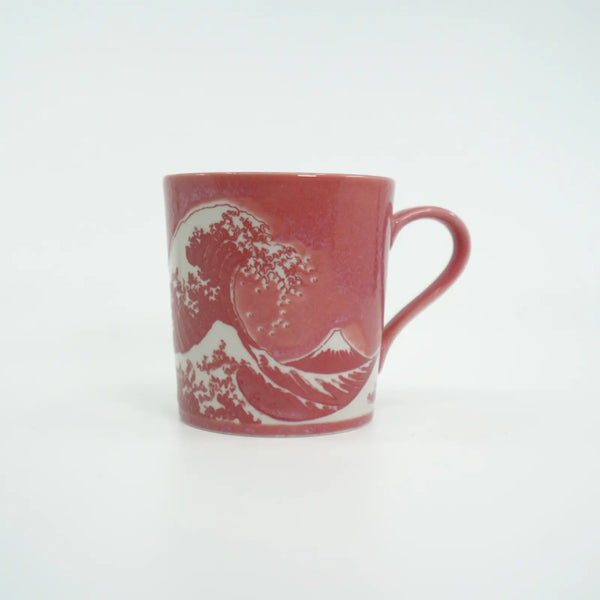
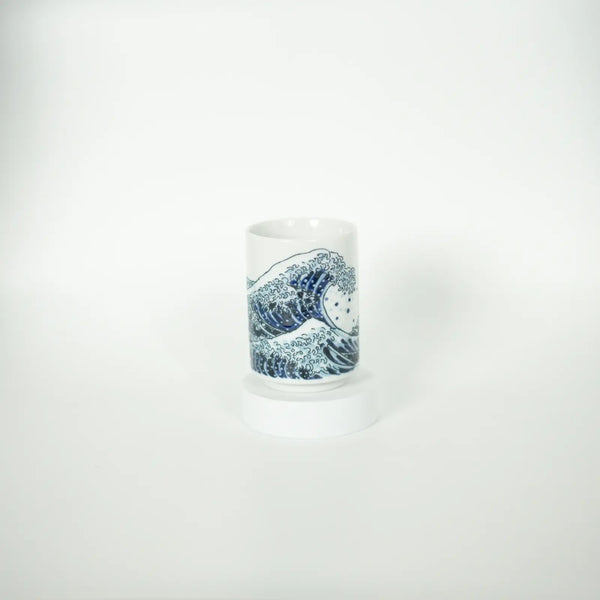
If your day starts with coffee, the Kanagawa Great Wave Mug in red or blue is the simplest way to put a masterpiece in your hand every morning. Prefer green tea? The Soho Hokusai Wave Yunomi Tea Cup has the traditional handle-free shape used across Japan. And if you're buying for someone else, the Great Wave Blue Mug Gift Set arrives ready to give, no wrapping stress required.

Great Wave Plates and Rice Bowls
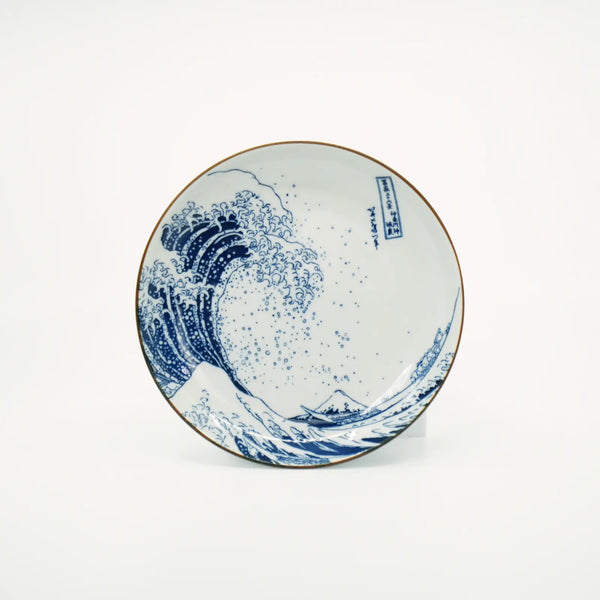
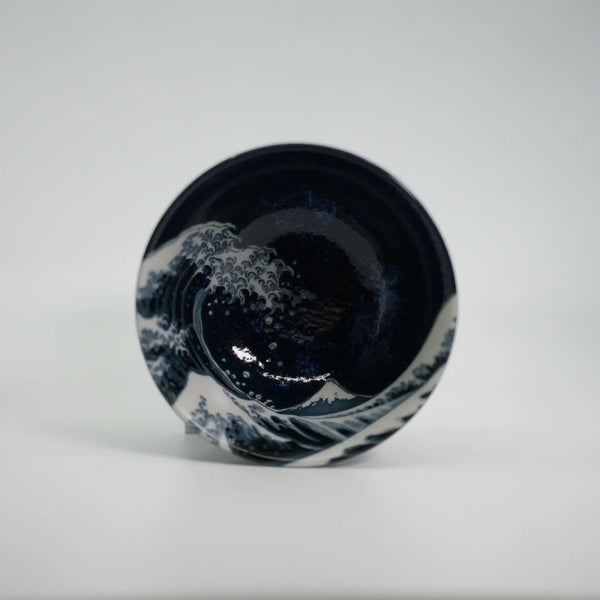
For the table, the Kanagawa Great Wave 10-Inch Plate and the Hokusai Great Wave Plate work just as well for serving dinner as they do propped on a shelf as art. The Kanagawa Great Wave Rice Bowl is an easy, affordable way to start a collection, and for something with a bit of personality, the Shiba Inu x Great Wave Plate puts Japan's favourite dog right in the middle of Hokusai's sea.

The Great Wave and Red Fuji Together
Can't pick between Hokusai's two most famous prints? You don't have to. The Hokusai Great Wave & Red Fuji Bowl Set with Chopsticks pairs both masterpieces from Thirty-Six Views of Mount Fuji, making it a thoughtful gift for anyone who loves Japanese art. Explore the full Hokusai Great Wave collection and find the piece that brings a little of Hokusai's ocean into your everyday.
Frequently Asked Questions
The Great Wave off Kanagawa was created by Japanese artist Katsushika Hokusai. Strictly speaking, it's a woodblock print rather than a painting: Hokusai designed the image, and skilled carvers and printers turned his design into the finished prints, which is how it could be produced in such large numbers.
It was made around 1831, as the first print in Hokusai's series Thirty-Six Views of Mount Fuji, published in the early 1830s. Hokusai was around seventy at the time, which makes it one of the most famous works ever created by an artist late in life.
It's most often read as a contrast between the raw power of nature and the fragility of people, with the huge wave threatening the fishermen while Mount Fuji stands calm and permanent in the background. Many people also see a message about resilience, since the boats are still pushing on despite the danger.
It's often described as one, but most art historians see it as a large wave out at sea rather than a tsunami hitting the shore. The Japanese title simply refers to a wave off the coast of Kanagawa.
The print measures roughly 25 by 37 centimetres, much smaller than most people expect given how famous it is. It was made as affordable everyday art, not as a grand gallery piece.