

Japanese Teapot Guide: Kyusu, Teapot Sets and How to Choose

Japanese Teapot Guide: Kyusu, Teapot Sets and How to Choose
There's a reason tea tastes better from a proper Japanese teapot. It isn't just nostalgia; it's design. Japanese teapots are shaped for Japanese teas, especially delicate green teas that turn bitter if they're steeped too long or poured too slowly. Whether you're buying your first Japanese teapot or looking for a Japanese teapot set as a gift, this guide explains the main styles and how to choose.
Step 1: Know the Main Types of Japanese Teapot
The Kyusu
The kyusu is the classic Japanese teapot for green tea. The most recognisable style has a side handle, called yokode, which lets you pour with a smooth twist of the wrist. Many kyusu have a fine built-in strainer, so loose-leaf tea can steep freely without ending up in your cup.
The Top-Handle Teapot
A top-handle teapot, or dobin, has a handle that arches over the lid. These are often slightly larger, making them a good choice for serving several people at once.
The Cast Iron Teapot
A Japanese cast iron teapot, or tetsubin, is heavy, durable and holds heat well. Traditionally, tetsubin were used to boil water, while cast iron teapots made for steeping are usually enamel-lined inside. They're beautiful, but they're heavier and need more care than ceramic teapots.
The Ceramic Teapot
Ceramic and porcelain teapots are lighter, easy to clean and don't affect the flavour of your tea. They're also where Japanese craftsmanship really shines, with hand-painted designs that make them as much an art piece as a teapot.
Step 2: Match the Teapot to Your Tea
Different teas need different treatment. Japanese green teas like sencha are best brewed with water around 70 to 80°C and steeped for about a minute, so a smaller teapot that pours quickly is ideal. Roasted teas like hojicha and black teas can handle hotter water and longer steeping, so a larger teapot works well. If you drink a bit of everything, a medium ceramic teapot is the most versatile choice.
Step 3: Decide Between a Teapot and a Teapot Set
A Single Japanese Teapot
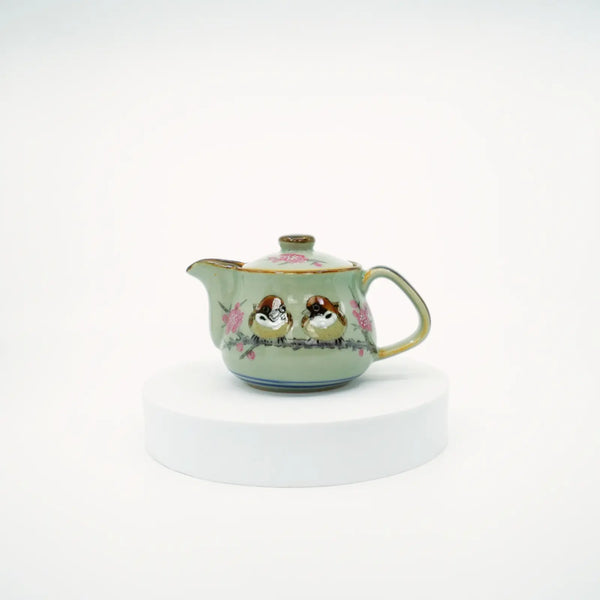
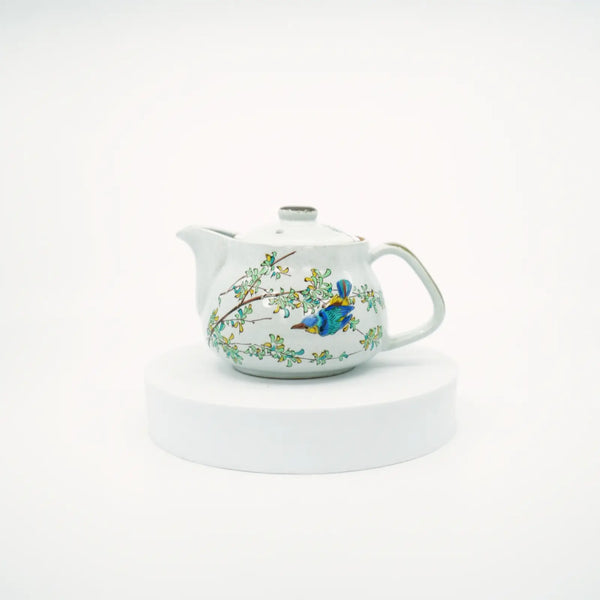
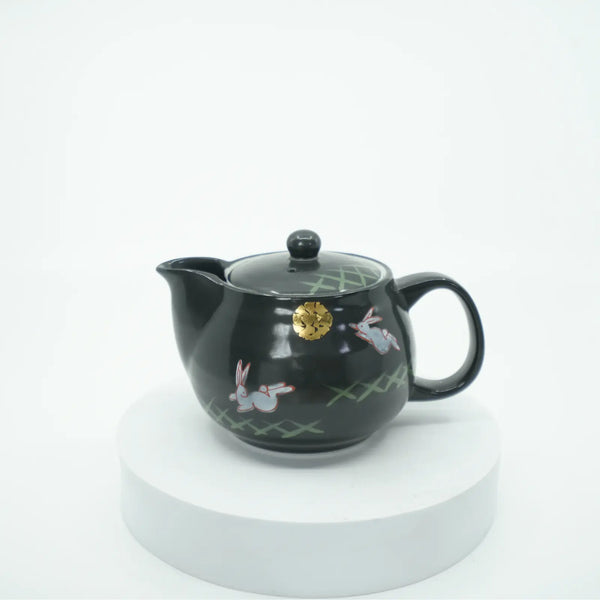
A single teapot is perfect if you already have cups you love. The Kutani Ware Sparrow Tea Pot, Kutani Ware Bird Tea Pot and Kutani Ware Jumping Rabbit Moon Teapot are all hand-decorated Kutani teapots with charming nature motifs.
A Japanese Teapot Set
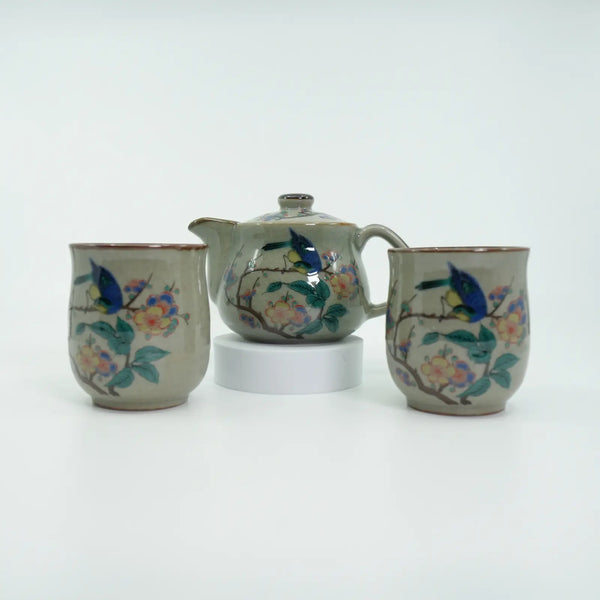
A Japanese teapot set gives you a matching teapot and cups, which makes it ideal for gifting or for anyone starting fresh. The Kutsurogi Flower & Bird Tea Set brings a graceful flower-and-bird design to the whole set. The Bird Lover's Mug & Teapot Collection pairs a teapot with a matching mug.
A Note on Kacho Fugetsu
Many Japanese teapots feature flowers, birds and seasonal scenes, and there's a reason for it. Kacho fugetsu translates to 'flower, bird, wind, moon', a classic Japanese phrase describing the beauty of the natural world through the seasons. You'll see it in the Kacho Fugetsu Teapot, and it's the idea behind why a Japanese teapot often feels calm and seasonal rather than simply decorative. Pouring tea from one is a small daily reminder to slow down and notice the season you're in.
Step 4: Consider a Statement Teapot for Gifting
If you're buying for a tea lover, a teapot with a story makes the gift more personal. Cat lovers will adore the Atelier Yu Cats in a Sunny Spot Kutani Teapot, with its sleepy cats basking in the sun. For more ideas, see our Japanese Christmas Gift Guide 2026.
Step 5: Care for Your Japanese Teapot
Rinse your teapot with warm water after each use and let it dry with the lid off, so no moisture is trapped inside. Avoid harsh detergents, especially on hand-painted designs, as they can dull the colours over time. Check each product page for specific care instructions.
Browse our full range of Japanese teapots and tea sets, delivered across Australia.
Frequently Asked Questions
The most common Japanese teapot is called a kyusu, which traditionally has a side handle and is designed for brewing green tea. Other styles include the top-handle dobin and the cast iron tetsubin.
A small ceramic kyusu is ideal for Japanese green tea, because it lets you steep the leaves briefly and pour quickly before the tea turns bitter.
Kirei Homeware stocks Japanese teapots and teapot sets online, including hand-decorated Kutani ware designs, with delivery Australia-wide.
Yes. A matching teapot and cups is one of the most popular Japanese gifts, because it's beautiful, practical and makes an everyday cup of tea feel special.