


What Is Kutani Ware? History, Colours and How to Identify Kutani Marks

What Is Kutani Ware? History, Colours and How to Identify Kutani Marks
Pick up a piece of Kutani ware and the first thing you notice is the colour: deep greens, golden yellows, rich reds and purples, painted so boldly the design almost glows. It's one of Japan's most celebrated porcelain traditions, and it looks nothing like the quiet, earthy ceramics many people picture when they think of Japanese pottery. Here's the story of Kutani pottery, what makes it special, and how to recognise it.
Where Does Kutani Ware Come From?
Kutani ware comes from Ishikawa Prefecture on Japan's west coast, in the region once known as Kaga. It takes its name from the village of Kutani, meaning 'nine valleys', where porcelain production began in the mid-1600s. Those earliest pieces, known today as Ko-Kutani or 'Old Kutani', are famous for their bold, painterly style and are highly prized by collectors.
The History of Kutani Pottery
Ko-Kutani: The First Kutani Ware
The original Kutani kilns produced porcelain for only a few decades before closing, for reasons historians still discuss. The surviving Ko-Kutani pieces became legendary for their daring use of colour and composition.
The Kutani Revival
In the early 1800s, Kutani ware was revived, and new kilns developed their own distinctive styles, from dense, detailed patterns to delicate gold decoration. During the Meiji era, Kutani ware from Japan was exported around the world and became popular in Europe and America, where it's still collected today.
What Makes Kutani Ware Special?
The Five Colours of Kutani
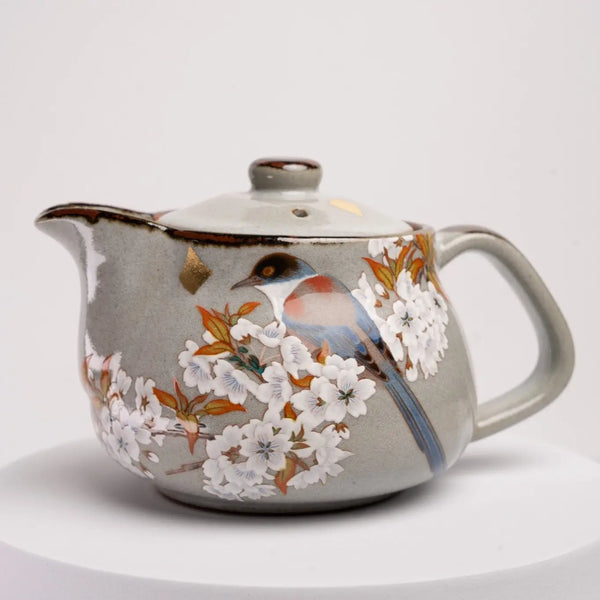
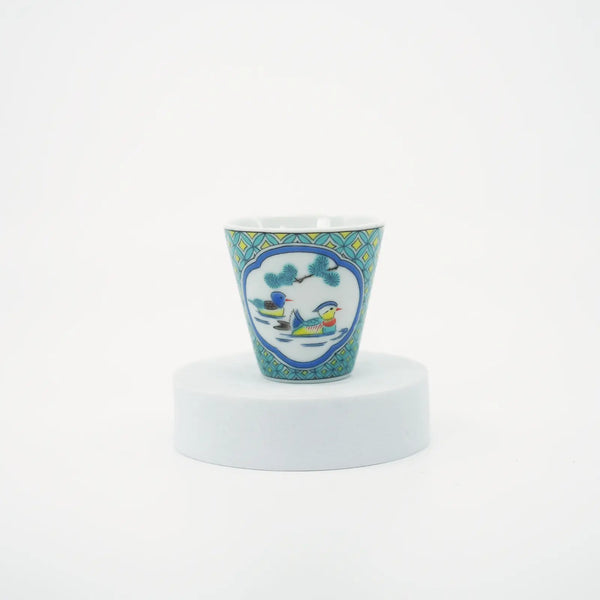
Kutani ware is best known for Kutani gosai, the five traditional overglaze colours: green, yellow, red, purple and deep blue. These enamels are painted on top of the glazed porcelain and fired again, giving the colours their rich, slightly raised, jewel-like finish.
Hand-Painted Designs
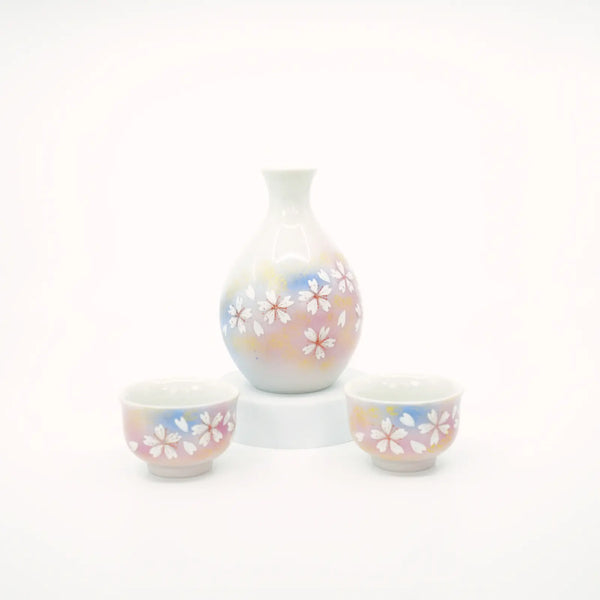
Kutani pieces are known for their painted designs, from birds and flowers to seasonal scenes. You'll see classic motifs like kacho fugetsu ('flower, bird, wind, moon') on the Kacho Fugetsu Teapot, and densely packed flower patterns, called hanazume, on pieces like the Kutani & Wakasa Sake Cup.
Kutani Ware Versus Everyday Japanese Ceramics
Where Mino ware is designed to be quiet and understated for everyday use, Kutani ware is made to be noticed, which is why it has long been a favourite for gifts and special occasions. You can read about the contrast in our guide to Mino ware.
How to Identify Kutani Marks
Many collectors search for Kutani marks to identify a piece. Most Kutani ware carries the characters 九谷 (Kutani) painted on the base, often inside a square or alongside the name of the artist, studio or kiln. Older pieces may have more elaborate marks, and styles vary widely across periods and makers. A Kutani mark is a good starting point, but if you're assessing an antique for value, it's worth consulting a specialist dealer, as marks alone can't always confirm a piece's age.
A Note on Wedgwood Kutani Crane
If you've searched for Kutani ware, you may have come across 'Wedgwood Kutani Crane'. This is a pattern made by the English company Wedgwood, inspired by Japanese Kutani design, rather than Kutani ware made in Japan. It's a lovely example of how far Kutani's influence has travelled, but authentic Kutani ware is made in Ishikawa Prefecture by Japanese artisans.
Modern Kutani Ware to Use Every Day
Kutani ware isn't just for display cabinets. Today's Kutani artisans create pieces made for daily life, and they bring a little joy to every cup of tea.
Kutani Teapots and Tea Sets
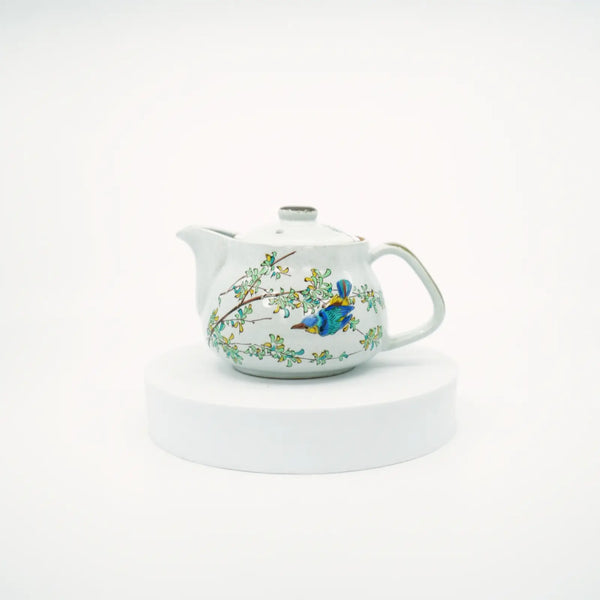
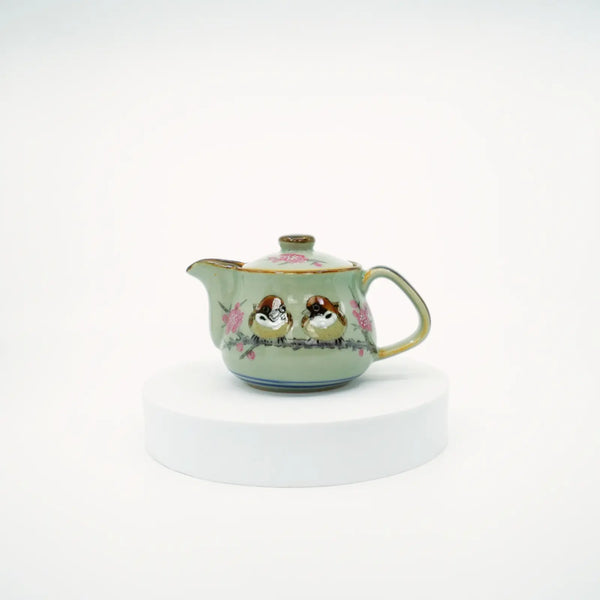
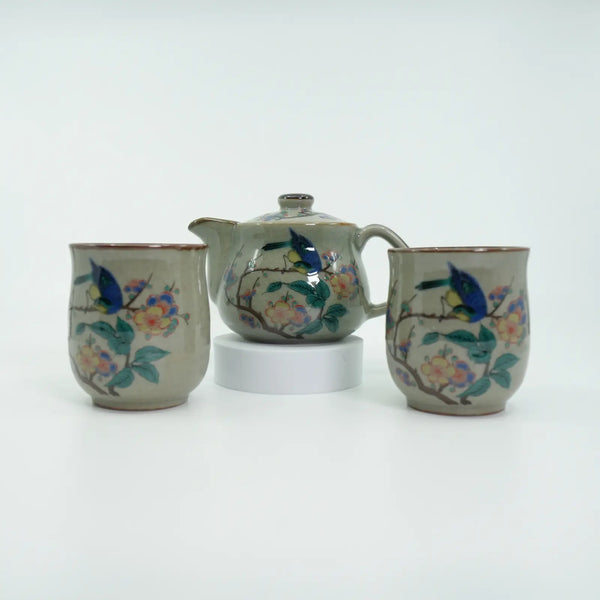
The Kutani Ware Sparrow Tea Pot and Kutsurogi Flower & Bird Tea Set are beautiful examples of Kutani's nature-inspired designs. See more in our Japanese teapot guide.
Kutani Matcha Bowls
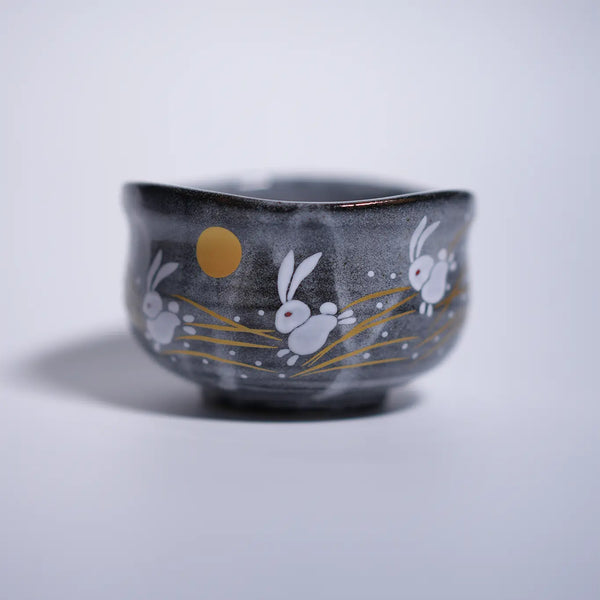
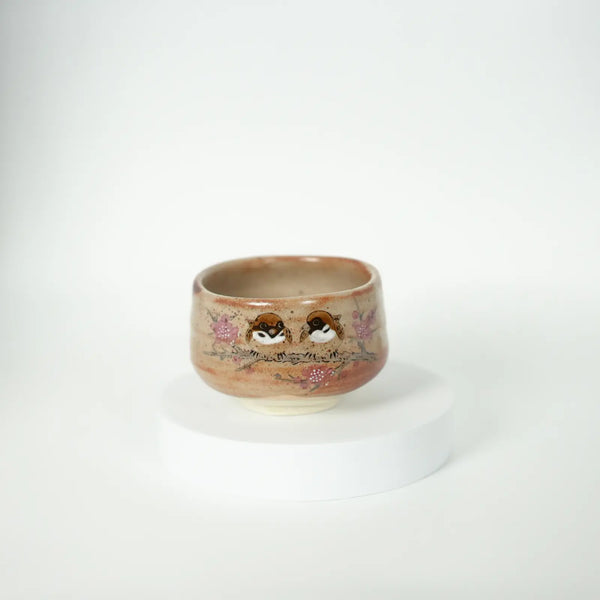
The Jumping Rabbit Matcha Bowl and Kutani Ware Spring Sparrow Matcha Bowl turn daily matcha into a small work of art.
Atelier Yu's Cats in a Sunny Spot
For cat lovers, Atelier Yu's Cats in a Sunny Spot collection brings the Kutani tradition into a playful, modern world, with mugs, tea cups, bowls and a teapot.
Explore our full Kutani ware collection, with hand-decorated teapots, tea sets, mugs, matcha bowls and sake cups delivered across Australia.
Frequently Asked Questions
Kutani ware is a traditional Japanese porcelain from Ishikawa Prefecture, dating back to the mid-1600s. It's famous for its bold overglaze painting in five signature colours: green, yellow, red, purple and deep blue.
Most Kutani ware has the characters 九谷 (Kutani) painted on the base, often with the artist's or kiln's name. For antiques, a specialist dealer can help confirm age and authenticity.
Antique Kutani ware, especially early Ko-Kutani pieces, can be highly valuable to collectors. Modern Kutani ware is made to be used and enjoyed, and it makes a meaningful gift.
No. Wedgwood Kutani Crane is a pattern by the English company Wedgwood, inspired by Kutani design. Authentic Kutani ware is made in Ishikawa Prefecture, Japan.