

The Moon Rabbit: Japan's Tsukimi Tradition and the Mug That Carries It
Look up at a full moon in Australia and you might see a face. Look up in Japan, and you'll be told there's a rabbit — sitting on the moon's surface, pounding rice into mochi with a wooden mallet.
It's one of the oldest images in Japanese folklore, and it's the reason rabbits appear on so much Japanese tableware. On Friday 25 September 2026, Japan marks Tsukimi, the autumn moon-viewing festival, and the moon rabbit is its central figure.
What is Tsukimi?
Tsukimi (月見) means, simply, moon-viewing. It falls on the fifteenth night of the eighth lunar month — a date that shifts each year against the Western calendar. The main night is called Jugoya, and in 2026 it lands on 25 September.
The custom arrived from China and took hold in the Japanese imperial court during the Heian period, around the ninth and tenth centuries. Aristocrats held gatherings called kangetsu-kai in their gardens, watching the moon's reflection in ornamental ponds rather than the moon itself, writing waka poetry and drinking sake.
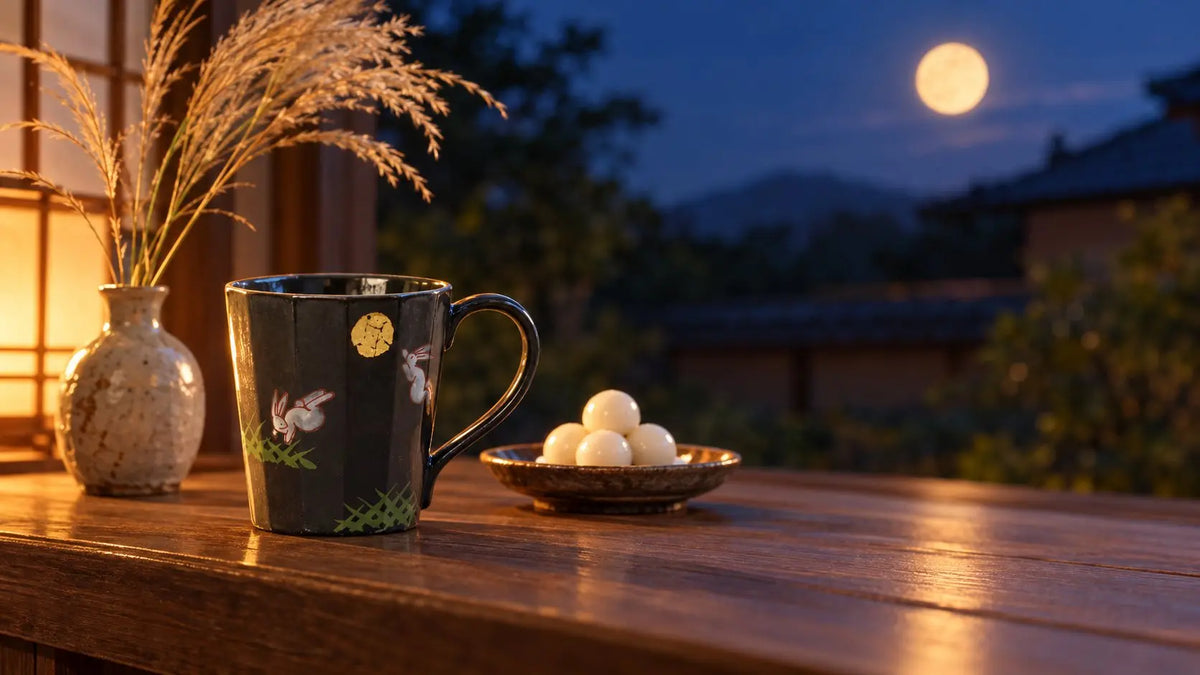
It has stayed a quiet festival. There are no parades or fireworks. People display tsukimi dango — small round rice dumplings stacked in a pyramid — alongside susuki pampas grass, and spend an evening outdoors with family. The dumplings echo the moon's shape. The grass stands in for rice stalks, a thanksgiving for the harvest.
There's a second night, too. Jusanya falls about a month later, on 23 October in 2026, and celebrates a waning, incomplete moon. Tradition holds that watching both brings good fortune — and the preference for the imperfect moon over the full one is a very Japanese idea.
Why a rabbit?
The story goes that three animals — a monkey, a fox and a rabbit — met an old beggar in the forest. The monkey gathered fruit and the fox caught fish, but the rabbit had nothing to offer. So it threw itself into the fire so the beggar could eat.
The beggar was a god in disguise. Moved by the sacrifice, he placed the rabbit on the moon so its selflessness would be remembered forever.
Look at a full moon and the dark maria do form a rabbit shape, mallet raised over a mortar. Once you've seen it, it's difficult to unsee.
What the rabbit means on ceramics
Because of this, the rabbit carries a specific weight in Japanese design that a Western reader might miss. It stands for selflessness and generosity first, and by extension good fortune, gentleness and new beginnings. It's also one of the twelve zodiac animals, which makes rabbit-motif pieces a natural gift for anyone born in a Year of the Rabbit — 1975, 1987, 1999, 2011, 2023.
Pair the rabbit with a moon, and you're looking at the tsukimi scene directly.
The Jumping Rabbit Moon Mug
This is where our Jumping Rabbit Moon Mug comes in. It's a Kutani ware piece, hand-painted, showing a rabbit mid-leap against a full moon — the tsukimi image compressed onto something you'll hold most mornings.
About Kutani ware
Kutani ware comes from Ishikawa Prefecture and has been produced for over 360 years. What sets it apart is the overglaze painting: colour applied on top of the fired glaze in bold, saturated pigment, then fired again. It gives the surface a depth and slight relief you can feel with a thumb.
Because the painting is done by hand, no two pieces are identical. Small differences in the rabbit's line and posture aren't flaws — they're the evidence of the technique.
Why this mug rather than a plate
Most Japanese moon-rabbit pieces are display objects. This isn't. It's a mug with a comfortable handle and a shape sized for daily coffee or tea, which means the image ends up in your hands every day rather than behind glass in a cabinet.
That's the argument for it as a gift, too. A print gets hung and forgotten. A mug gets used.
Marking Tsukimi at home
You don't need much. Tsukimi is deliberately unelaborate.
- Find a clear view of the moon. A balcony, a back step, a window facing east. Moonrise is the moment.
- Make or buy something round. Tsukimi dango are traditional, but mochi from a Japanese grocer works, and so does anything pale and round.
- Set out grass or dried stems. Susuki is the traditional choice. Any tall autumn grass carries the same idea.
- Bring a warm drink outdoors. Green tea or hojicha suits the evening. This is where the mug earns its place.
- Don't rush it. The whole point is sitting still for an hour.
If you'd like the full setting, the Jumping Rabbit Moon Teapot and Teacup Set share the same motif, and the Golden Moon Rabbit Rice Bowl & Tea Cup Set arrives gift-boxed.
Frequently asked questions
When is Tsukimi in 2026?
The main moon-viewing night, Jugoya, falls on Friday 25 September 2026. The second night, Jusanya, falls on Friday 23 October.
Why does the date change every year?
Tsukimi follows the traditional lunar calendar rather than the Gregorian one. It's set to the fifteenth night of the eighth lunar month, which drifts between mid-September and early October.
What is the moon rabbit called in Japanese?
Tsuki no usagi (月の兎), literally "moon rabbit." You'll also see it referred to as the mochi-pounding rabbit, after what it's depicted doing.
Is Kutani ware safe for everyday use?
Yes, though hand washing is recommended for hand-painted pieces to protect the overglaze. Check the individual product page — some Mino ware pieces in our range are dishwasher and microwave safe.
What makes a good Tsukimi gift?
Anything carrying the rabbit-and-moon motif. Pair sets work well for couples, and the boxed rice bowl sets need no additional wrapping. For anyone born in a Year of the Rabbit, the symbolism does the work for you.
Do you ship within Australia?
Yes. All pieces ship from our Sydney warehouse in protective packaging made for ceramics, dispatched on business days.
Shop the full range: Japanese Rabbit Mugs & Tableware
Keep Reading

Written by Jie Xin Eugene Yeoh